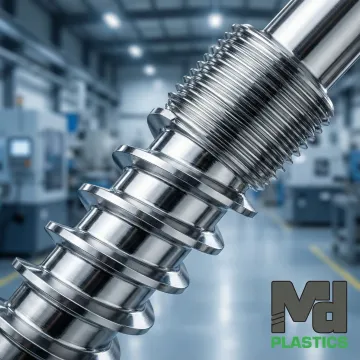
What makes custom plasticating screws better than standard designs?
Custom-engineered screws are precisely calculated for your specific materials, machines, and process objectives. Unlike generic designs, they account for material melting points, thermal sensitivity, shear characteristics, and flow properties. This results in superior melt quality, reduced viscosity variation, lower scrap rates, and extended equipment life. Our Posi-Melt™ screws integrate advanced features like XLA mixing elements and optimized compression ratios that standard screws cannot provide.
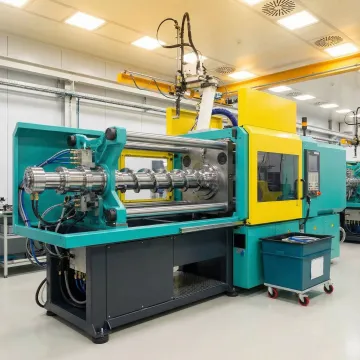
How does the Inject-EX™ system improve upon traditional injection molding?
The Inject-EX™ system addresses fundamental deficiencies in reciprocating screw technology by using a stationary, non-reciprocating helical plasticating screw with a mechanical check valve that ensures complete separation between the melting chamber and melt pool. This design delivers superior melt homogeneity, enables real-time mass density monitoring for quality control, and eliminates issues common with traditional check valves. The result is more consistent parts and better process control.
What is the typical lead time for custom screw design and manufacturing?
Lead times vary based on project complexity, material specifications, and current production schedules. After our initial consultation and data gathering phase, we provide a detailed timeline that includes design and math modeling, manufacturing, and testing phases. We work efficiently to minimize downtime while ensuring every component meets our exacting standards. Contact our engineering team for a project-specific timeline estimate.
Can you retrofit existing injection molding equipment?
Absolutely. We specialize in equipment conversions and upgrades including LSR conversions, vented barrel conversions, and downsizing or upsizing injection units. These modifications allow you to expand capabilities or optimize performance without purchasing entirely new machines. Our engineering team assesses your current equipment and recommends cost-effective solutions that deliver measurable improvements.
What materials and applications do your solutions support?
Our custom solutions support a wide range of thermoplastics and specialty materials including medical-grade polymers, food-contact materials, liquid silicone rubber (LSR), moisture-sensitive resins, and engineering plastics. We have extensive experience with challenging applications requiring tight tolerances, minimal contamination, consistent melt quality, and regulatory compliance for medical device, automotive, and consumer electronics manufacturing.
How does the Melt-Profiler™ system improve quality control?
The Melt-Profiler™ measures inline melt temperature with greater accuracy than traditional systems and calculates real-time quality metrics that can predict and document part quality. This is critical for applications requiring tight process control, regulatory documentation, and validation—especially medical-grade polymers and precision parts. The system reduces variability and ensures repeatable results across production runs.
What kind of performance improvements can I expect?
Results vary by application, but documented case studies show 58% improvement in shot-to-shot consistency, 20% reduction in cycle times, 30% extended mold maintenance intervals, and significant decreases in scrap rates. Our solutions improve melt quality, increase throughput, extend equipment life, and reduce downtime. We work with you to establish baseline metrics and measure improvements specific to your operation.
Do you provide ongoing support after installation?
Yes. Our end-to-end approach includes follow-up support, process optimization assistance, and troubleshooting. We don't just deliver components—we partner with you to ensure optimal performance. Our application engineering team remains available to help you refine processes, address new challenges, and maximize the value of your investment in MD Plastics technology.